Instagram AmazingRibs Facebook AmazingRibs X - Meathead Pinterest AmazingRibs Youtube AmazingRibs

Welcome!


This is a membership forum. Guests can view 5 pages for free. To participate, please join.

[ Pitmaster Club Information | Join Now | 30 Day Trial | Login | Contact Us ]

Only 4 free page views remaining.

Announcement

Collapse
No announcement yet.

225 degrees Weber 18”

Collapse
X
 
  • Filter
  • Time
  • Show
Clear All
new posts

    225 degrees Weber 18”

    Hi there folks,

    Total newbie here and really sorry if this has been answered before - I promise I had a search but couldn’t really find anything.

    I did my first pork but on the weekend on my brand new 18.5 inch Weber kettle. Following the guidelines on AmazingRibs and the Weber manual I lit the charcoal using a fire starter chimney thing. I used about 40ish briquettes I put all the charcoal to one side and used 2 pans with water. I opened the bottom vents about 1/8th of the way. Now from here on I went bad because I put the pork on straight away and shut the lid then realised the temp was way too high (iGrill put it around 200 Celsius (400ish F). So then tried to cool it down further, closed some of the top vents etc but I just couldn’t seem to get it as low as 225F. It sat around 260F for quite a while but the first 1.5hrs it was well over 300. I tried adding cold water to the pans to hope that would cool but with no luck.

    Pork was amazing although a tad dry (cooked about 8 hours). So looking back my guess of what to do differently would be to use less briquettes (half a chimney or so instead of a full one). Any other tips from anyone using one of these BBQ’s? Ultimate aim is to do a brisket but clearly need better temperature control to not turn that into a slab of leather.

    thanks!!

    #2
    Yeah, less briquettes. A snake method would do the trick. Better to be a little low than trying to calm things down, as you can see. FYI- pork butts can take a 350 cook no problem.

    Comment


    • Elton's BBQ
      Elton's BBQ commented
      Editing a comment
      Or just remove hot briquettes to reduce the heat Dar3dev
      Last edited by Elton's BBQ; December 4, 2018, 02:27 PM.

    #3
    Welcome Dar3dev No need to apologize, we're not one of those forums that will get after you for asking repeat questions. We love BBQ and talking BBQ and most any member will gladly help you with the newbiest of questions. We're happy you're here!

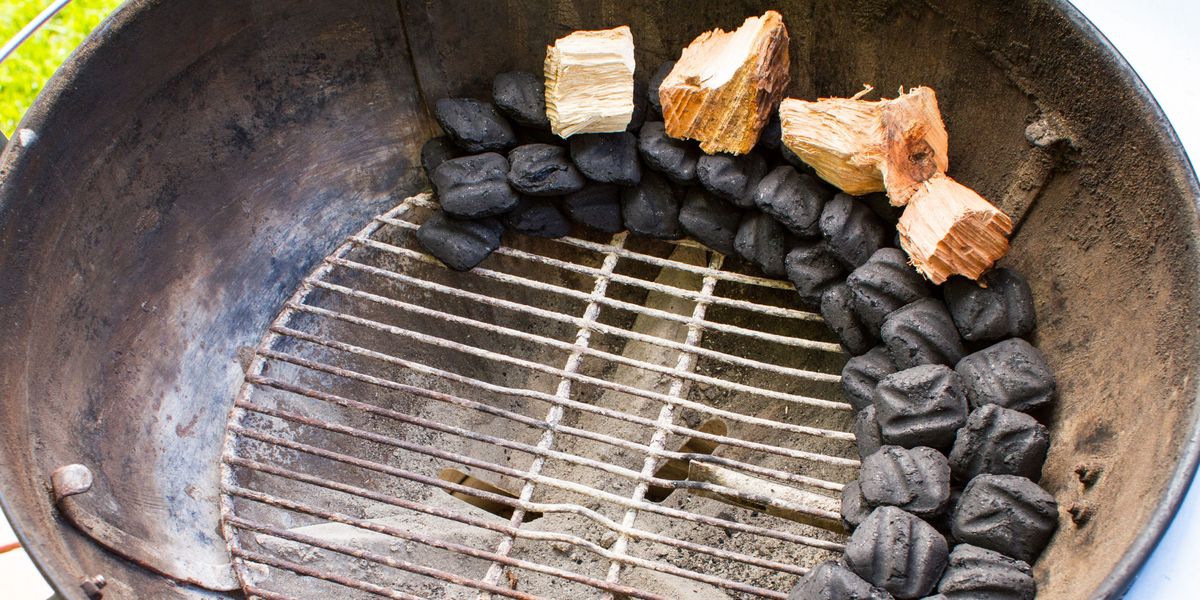
    I'd start with about 15, maybe 20 well-lit briquettes, depending on your weather, to get up to 225F in the 18". Like Jerod says, butt them up against some unlit so that they light slowly as your cook progresses, like a fuse. Too much time near 350 can cause the sugars in your rubs to burn.

    Comment


    • Dar3dev
      Dar3dev commented
      Editing a comment
      Awesome will try that next time!

    #4
    NIGHTOWLS! I am posting, and leaving...

    There's a downsized SnS for the 18" from Adrenaline BBQ that can help you two-zone and take on briskets, but in the meantime you can use a medium sized cookie sheet to lower temps away from the fuel. This is also how I did my first couple kettle briskets, and how I still do pork picnic roasts.

    You'll get it! No one but those gifted by the fire gods gets it right the first time. Keep us posted and let's keep talking about it!

    Click image for larger version  Name:	20180725_190927_resized.jpg Views:	9 Size:	1.46 MB ID:	601879
    Last edited by JGo37; December 4, 2018, 02:29 AM.

    Comment


    • Dar3dev
      Dar3dev commented
      Editing a comment
      PS: I like that little side table. Is that an add on?

    • JGo37
      JGo37 commented
      Editing a comment
      Dar3dev yes, but I don't know if they make it for the 18". All you really need is a folding 'TV' table if they don't. I have two shelves on Lucille - the red head above, now. I have a Smokenator & SnS - I don't get better cooks from them. The idea is saving costs in the long run by not using disposable stuff. In the short term, I recommend this to learn your kettle capabilities.

    • Dar3dev
      Dar3dev commented
      Editing a comment
      Ok yes that’s what I’m trying to figure out - do I need these things or not. Smokenator is pretty expensive here from the place that parallel imports it and postage from the US high so if it doesn’t really change things then not worth it!

    #5
    Phew thanks guys that’s helpful! I will try that next time - will probably also use less charcoal that way.

    I realised i should probably upload at least a picture or 2 of that first ever Butt so see below 😁
    Attached Files

    Comment


    • JGo37
      JGo37 commented
      Editing a comment
      That looks pretty good. Look up the recipe for Texas Juice - mop juice - to add to that when pulled. That'll juice things up.

    • Dar3dev
      Dar3dev commented
      Editing a comment
      Thank you will have a look! Made the Lexington sauce I found a recipe for which I really enjoyed but my wife wasn’t as keen so didn’t mix it through 😊

    • tenphases
      tenphases commented
      Editing a comment
      Looks good to me congrats!!

    #6
    When doing low/slow you want a smaller/hotter fire, especially if you are using a little bit of wood to add smoke. When I do low/slow in my 22.5" kettle I only light about a dozen coals and then set up a fuse/snake (the Slow n Sear makes this a breeze). I try to run with my vents mostly open and then control temps with the top vent. IMO 225 is vastly over-rated. I prefer smoking hotter than that. For anything other than baby backs if you are under 300 you are safe. I like 350+ for birds. Don't fret about temps - if you are in the 225-295 range leave your vents alone. If you do have to make a vent adjustment, be patient - make your adjustment and wait 10-15 minutes before checking again. Most importantly - have fun!

    Comment


      #7
      Dar3dev here is as good a pictorial description of the snake method as any, and it is what I would use if I did not have a Slow 'N Sear. With your 18" kettle you are somewhat limited, but I think this will still work, with the meat and water pan in the middle of the grill. I always started with 5-6 lit coals at the end of the snake, and did 2x2 around the perimeter of the grill.


      Comment


      • Dar3dev
        Dar3dev commented
        Editing a comment
        Might have to give that a go - thanks mate!

      #8
      Your meat looks like it came out good. Couple comments that I didn't see mentioned above;

      1) 8 hours producing dry meat, seems like a bit too much cooking time. Did you temp the meat, if so what internal temp did you take it off at? Did you rest in a faux cambro?

      2) It doesn't appear that you mixed your pulled meat with some sort of bbq sauce. That would add back moisture.

      Sounds like you're on the right track. Follow the advice here and try again, you'll master it !!

      Comment


      • Dar3dev
        Dar3dev commented
        Editing a comment
        Thank you! Used 2 probes and took it off at 200 and 195. I didn’t end up resting in camo, I wrapped it in foil and left it for about 30 minutes. I used Lexington sauce but didn’t mix it into the meat as my wife was being fussy (so added it on top for me)

      #9
      The snake method is a good call. I cook hot and fast now. You could go 300 all the way if you wanted.

      Comment


        #10
        snake method in a weber kettle works great. Try getting yourself a couple bricks that are fire resistant and using them to build a wall to hold your charcoal on one side of the kettle. Put all your unlit charcoal in the firepit that creates, leave a space at one end of the pit and add your 15 or so lit briquettes there. Or use the cookie sheet method from JGo37 .

        If you decide you want a more serious tool for your kettle, the Slow n Sear (made by Adrenaline BBQ) is better than the Smokenator. But either one will advance your kettle game dramatically.

        This is a weber set up like I'm describing, but the snake has been going for a while. You could also use a water pan to hold the charcoal to one side, I've seen that, too.

        Click image for larger version  Name:	smoking-on-weber-bricks.jpg Views:	1 Size:	144.8 KB ID:	602028
        Last edited by ecowper; December 4, 2018, 11:25 AM.

        Comment


        • JGo37
          JGo37 commented
          Editing a comment
          Dar3dev I guess if I was going to invest in accessories, I'd move to the 22.5" kettle first. The add-ons are expensive for the inexpensive 18" kettle. The 2 zone methods you've seen here work as well, but take more work.

        • JGo37
          JGo37 commented
          Editing a comment
          Dar3dev if you keep filling the SnS water reservoir on the 22.5 & up, you'll get more moisture than any water pan method other than a pan right on top of the coals.

        • Dar3dev
          Dar3dev commented
          Editing a comment
          Awesome thank you that’s helpful. Thought I’d start with the 18” (Weber kettles are about double the price down under compared to the US).

        #11
        As JeffJ said, 225 is nice, but it's not required. When I cook ribs, I am fine with anything between 225 and 250. Butts are even more forgiving. If I fixate on keeping the temps at 225, I'll spend too much time nudging the vents and making myself crazy. Basically, you want the bottom vents open just a crack - about 1/4 to 1/3 on each hole. The top vents don't matter too much. When you set it up so that you have the coals on one side and the meat on the other, put the top vent over the meat. This will better draw the smoke over the meat. I usually leave them at least half open, but you can choke them down if the temp is running a bit hot, or nudge them open if it's running a bit low. Think of it as the bottom vents are for larger temp adjustments, and the top vents for fine tuning. You'll get more temp movement from a nudge on the bottom vent than from the same nudge on the top vents.

        But like others said, a Slow n Sear will dramatically change your game. It makes low and slow almost foolproof, and reverse searing steaks and chops is far easier and uses less fuel as well. It's well worth the money, and would be at twice the price. But even the SnS charcoal basket for the 18 would give you a significant improvement. It's basically the same as the SnS the big difference is it doesn't have a water reservoir. It's still well worth your money.

        There are other methods for maintaining a low and slow fire - as mentioned here. Snakes are good. All methods start with only lighting a handful of coals and letting the fire spread slowly to the unlit briqs. With a full or even a half chimney, you'll never get the fire down to low and slow levels unless you almost completely choke the fire out, which defeats the purpose.

        Comment


        • Dar3dev
          Dar3dev commented
          Editing a comment
          Very helpful thank you! Do you reckon that charcoal basket is significantly better than the Weber ones? (Will need to import as there’s no one stocking SnS in NZ).

        • Buck Flicks
          Buck Flicks commented
          Editing a comment
          I've never seen the Weber charcoal baskets in person, but I imagine they'll work similarly. The magic of the SNS is the shape, which minimizes airflow for slow cooks, allowing you more control over temps and you use less charcoal over the same amount of time. The main difference is the sloped side of the SnS compared to the Weber, but they look fairly similar. You'll probably be fine with the Weber.

        #12
        Originally posted by Buck Flicks View Post
        As JeffJ said, 225 is nice, but it's not required. When I cook ribs, I am fine with anything between 225 and 250. Butts are even more forgiving. If I fixate on keeping the temps at 225, I'll spend too much time nudging the vents and making myself crazy. Basically, you want the bottom vents open just a crack - about 1/4 to 1/3 on each hole. The top vents don't matter too much. When you set it up so that you have the coals on one side and the meat on the other, put the top vent over the meat. This will better draw the smoke over the meat. I usually leave them at least half open, but you can choke them down if the temp is running a bit hot, or nudge them open if it's running a bit low. Think of it as the bottom vents are for larger temp adjustments, and the top vents for fine tuning. You'll get more temp movement from a nudge on the bottom vent than from the same nudge on the top vents.
        I used the bottom vent as my primary control for a long time. It was kind of a hassle because you have to bend down to see where it's at even if you've made some marks to help you know where it's at. But that's how I did it and that worked. Then I read on the Weber website they recommend leaving the bottom vent generally fully open and advice adjusting the top vent instead. I made the switch and haven't looked back.


        Click image for larger version

Name:	b5x7Gks.png
Views:	184
Size:	230.4 KB
ID:	602127

        Comment


        • Dar3dev
          Dar3dev commented
          Editing a comment
          I had seen that too but then this site recommended keeping top open and use the bottom for control. as it’s the one touch system I kept using my phone in Selfie mode to see how far open the bottom vent was haha

        • Attjack
          Attjack commented
          Editing a comment
          Try the Weber way. It's super nice to adjust from the top instead and it works. If you don't like it go back to selfie mode!

        #13
        I prefer to follow the ABC instructions for using the Slow and Sear, and it works well for me. I took a sharpie and marked on the vent slide handle where 1/4 open, 1/2 open and full open are. That's generally good enough to get it in the ballpark to use the top vents as the fine tuners. I saw those Weber instructions as well, and they work ok for a hot fire, but I found it impossible to maintain a low temp with the bottom vents fully open with the SNS. But... it's all about options! That's the beauty of a site such as this. So many different ways to get things done!

        Comment


        • Attjack
          Attjack commented
          Editing a comment
          Yeah, what you can do is just close the bottom vent some for low and slow then proceed with using the top vent.

          That said I started using a Kamado for low and slow and then more recently have pretty much abandoned 225. 250 is a low as I'll go and I'm generally going higher than that.

          You're right there are many ways to go. I shoot for ease and efficiency.

        #14
        Another +1 for snake method, IMO it's by far the easiest way to maintain temperature as you can really dial in how much charcoal is burning at any given time. Definitely wait to put your meat on though until after you've gotten the temp somewhere close. And definitely err on the side of less coals rather than more, you can always add more.

        Also I agree with a lot of the posters here, 225 is fine if you have all day, but anywhere in the 250ish range I have found is fine, and will speed up your cook a little with no negative results. My last pork shoulder was done at ~260 or so and still had a lovely bark, turned out great. At 225 it probably would have taken at least an hour longer and I'm confident the end result would be essentially identical. Also with large cuts like that (not so much with steaks and chops), then wrapping it up and resting it indeed makes a difference. Like a lot of folks, I just wrap in foil (or butcher paper if you have it), then in a couple of towels and stick it in a cooler for 45 mins or so, longer if it's a particularly large roast. Lastly, I like to catch the drippings in a tray not only to keep my grill from becoming a grease pit, but also I'll run it through a strainer to get out any chunks of whatever, and either add it to my sauce, or even just pour it over the pork once it's pulled to add back some moisture if it's a touch on the dry side. Happens to the best of us, sometimes you just end up with a more dry piece than normal.

        Anyway it's not something you learn overnight, keep trying out different techniques and see what works for you. I've found it's VERY helpful to keep notes as I go that I can refer to the next time, as you'll never remember in detail what you did every time, and it's really great to be able to replicate the things that did work, and just focus on changing one variable at a time to see where you're having issues. Stuff like how much charcoal you used, how fast it burned, and making a note of the BBQ temp, meat temp, and vent settings every 15 mins or so can really help while you're still figuring stuff out. Once you've done it a bunch of times and gotten consistent results obviously you don't need to be mega-note taking all the time but it really helps early on until you know your grill well. Best of luck!

        Comment

        Announcement

        Collapse
        No announcement yet.
        Working...
        X
        false
        0
        Guest
        Guest
        500
        ["membership","help","nojs","maintenance","shop","reset-password","authaau-alpha","ebooklogin-start","alpha","start"]
        false
        false
        Yes
        ["\/forum\/free-deep-dive-guide-ebook-downloads","\/forum\/free-deep-dive-guide-ebook-downloads\/1157845-paid-members-download-your-6-deep-dive-guide-ebooks-for-free-here","\/forum\/the-pitcast","\/forum\/national-barbecue-news-magazine","\/forum\/national-barbecue-news-magazine\/national-barbecue-news-magazine-aa","\/forum\/national-barbecue-news-magazine\/national-barbecue-news-magazine-aa\/bbq-news-magazine-2019-issues","\/forum\/national-barbecue-news-magazine\/national-barbecue-news-magazine-aa\/bbq-news-magazine-2020-issues","\/forum\/national-barbecue-news-magazine\/national-barbecue-news-magazine-aa\/bbq-news-magazine-2021-issues","\/forum\/national-barbecue-news-magazine\/national-barbecue-news-magazine-aa\/bbq-news-magazine-2022-issues","\/forum\/national-barbecue-news-magazine\/national-barbecue-news-magazine-aa\/current-2023-issues","\/forum\/national-barbecue-news-magazine\/national-barbecue-news-magazine-aa\/current-2024-issues","\/forum\/national-barbecue-news-magazine\/national-barbecue-news-magazine-aa\/current-2025-issues","\/forum\/national-barbecue-news-magazine\/national-barbecue-news-magazine-aa\/current-2026-issues","\/forum\/bbq-stars","\/forum\/bbq-stars\/tuffy-stone","\/forum\/bbq-stars\/meathead","\/forum\/bbq-stars\/harry-soo","\/forum\/bbq-stars\/matt-pittman","\/forum\/bbq-stars\/kent-rollins","\/forum\/bbq-stars\/dean-fearing","\/forum\/bbq-stars\/tim-grandinetti","\/forum\/bbq-stars\/kent-phillips-brett-gallaway","\/forum\/bbq-stars\/david-bouska","\/forum\/bbq-stars\/ariane-daguin","\/forum\/bbq-stars\/jack-arnold","\/forum\/free-deep-dive-guide-ebook-downloads"]
        /forum/free-deep-dive-guide-ebook-downloads